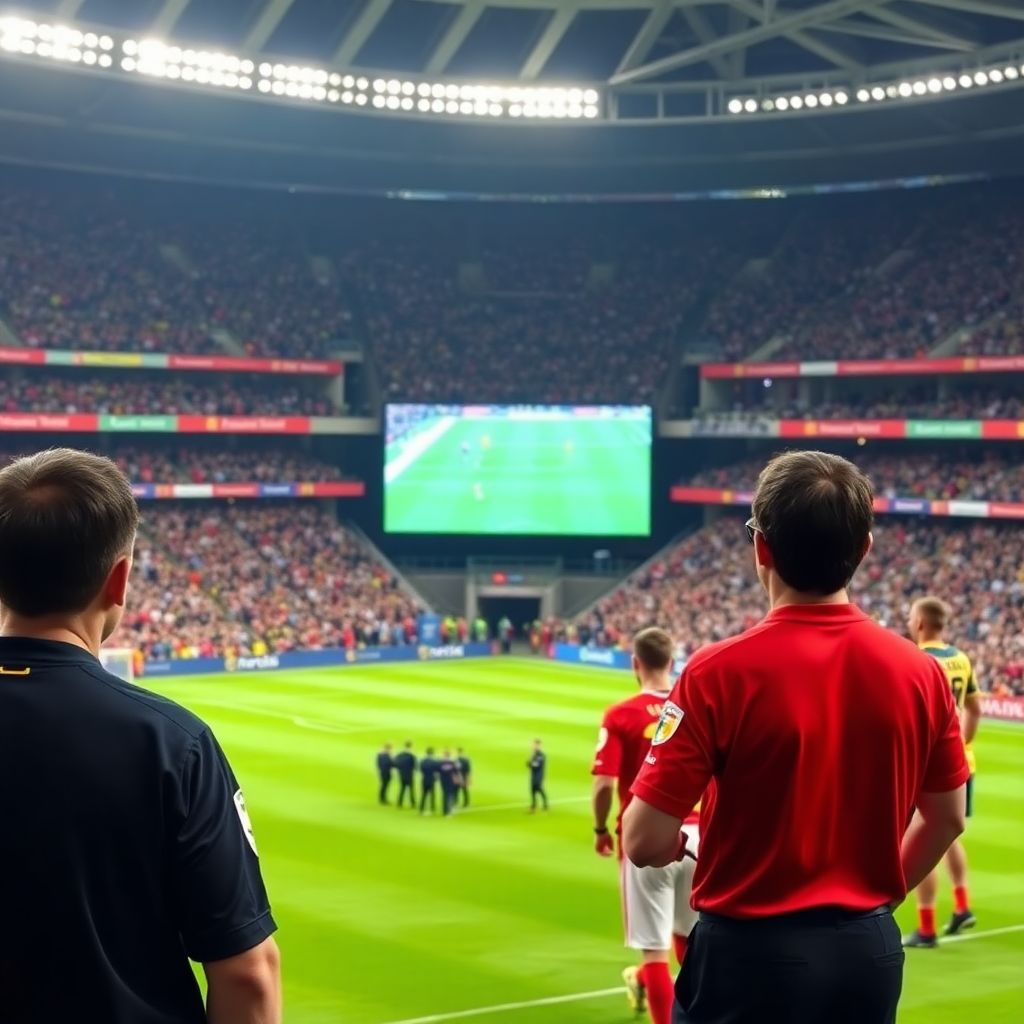
VAR makes top-level football somewhat fairer on clear, objective incidents (offsides, mistaken identity, some penalties), but it does not eliminate controversy or bias. Its justice depends on protocol design, referee training and transparency. For Spanish football stakeholders, the best «version» of VAR balances accuracy, speed, and respect for on‑field authority.
Snapshot: VAR’s Measurable Effects
- VAR reduces clear, objective errors but cannot fully standardise subjective decisions like handball or soft penalties.
- The impacto del VAR en decisiones arbitrales de fútbol is greatest in goal situations, mistaken identity and offside calls.
- Delays and communication issues often overshadow accuracy gains in fan perception, especially in tight La Liga matches.
- Competition balance improves slightly when big-club bias is checked, but this effect is uneven between leagues.
- Protocols that limit interventions to «clear and obvious» errors tend to protect game flow better than hyper‑interventionist models.
- Transparent explanations and semi‑automated offside technology can restore trust where opiniones sobre el VAR en la liga española are divided.
How VAR Changed Decision-Making: Scope and Limits
To understand whether football is more «just» with technology, you need criteria that go beyond simple pro‑ or anti‑VAR sentiment. The following lenses help structure any VAR justicia en el fútbol análisis in a concrete, comparable way:
- Type of decisions reviewed: offsides, penalties, red cards, mistaken identity, and rare situations (violent conduct off the ball, encroachment on penalties).
- Intervention threshold: how strictly «clear and obvious error» is applied; whether subjective decisions are re‑refereed on screen.
- Time cost: average duration of checks and on‑field reviews, and their concentration in high‑leverage moments.
- Transparency and communication: what TV viewers, stadium fans and teams hear during a review, and how final explanations are delivered.
- Consistency across matches: whether similar incidents are treated similarly across gameweeks and competitions.
- Psychological impact on referees: confidence, fear of mistakes, and tendency to «delegate» close calls to VAR.
- Competitive balance: whether smaller clubs get closer to equal treatment against big brands over a full season.
- Fan legitimacy: whether supporters feel the process reflects football’s spirit of fairness, not just rule‑book literalism.
- Adaptation to local culture: how national federations, including in Spain, tune protocols to fit tactical style and fan expectations.
Using these criteria clarifies ventajas y desventajas del VAR en el fútbol in a structured way, instead of collapsing all experiences into a simple «for or against» stance.
Statistical Evidence: Match- and Season-level Error Rates
Even without exact numbers, we can compare typical patterns seen across top leagues before and after VAR. This supports a more grounded view of cómo afecta el VAR a la justicia en el fútbol, especially at match and season level.
| Variant | Best for | Pros | Cons | When to choose |
|---|---|---|---|---|
| Pre-VAR era (traditional refereeing) | Leagues prioritising flow and simplicity over corrective technology | Clear responsibility; continuous rhythm; no screen‑based controversy; simpler for fans. | More uncorrected clear errors; stronger home and big‑club advantage; no remedy for unseen violent conduct. | Lower divisions or amateur competitions where tech cost and complexity outweigh potential justice gains. |
| Basic VAR (checks only clear, objective errors) | Competitions seeking a balance between justice and flow with limited interventions | Corrects offsides and obvious penalties; keeps most authority with on‑field referee; shorter reviews. | Some subjective errors remain; fans may not understand why borderline calls are not re‑refereed. | Top leagues that want fewer scandals without turning every contact into a video incident. |
| Proactive VAR (frequent interventions on subjective calls) | Federations aiming to minimise any visible mistake, even in grey areas | More incidents reviewed; fewer «how was that missed?» moments; comfort for referees under media pressure. | Longer delays; fragmented matches; perception that the game is re‑refereed from a booth. | Short tournaments where each error is politically costly, and stakeholders accept more interruptions. |
| Hybrid model (VAR plus semi-automated offside) | Elite competitions seeking both precision and predictable timing | Fast, objective offside lines; VAR focuses on penalties and reds; better perception of fairness in goals. | High tech and training costs; fans must trust complex systems they cannot fully see. | Top European leagues and international tournaments willing to invest in advanced technology and communication. |
For La Liga and similar competitions, the «Basic VAR» or «Hybrid model» typically offers the best trade‑off: significant reduction in clear errors and improved season‑long fairness, with fewer rhythm disruptions than a hyper‑interventionist approach.
Which Calls Benefit Most: Goals, Penalties and Red Cards
Justice is not uniform across incident types. To choose the «best» VAR setup, think in scenarios that reflect real match tensions and the impacto del VAR en decisiones arbitrales de fútbol on each.
- If goals are your main concern, then a Hybrid model with semi‑automated offside is preferable: tight offside calls become faster and more objective, and clear encroachments or handballs in the build‑up can be checked without re‑refereeing every duel.
- If soft penalties are causing most controversy, a restrained Basic VAR protocol works better: only clear errors are changed, and the referee’s initial interpretation of marginal contact is respected, which reduces endless debate about minor tugs and falls.
- If player safety and violent conduct worry you most, a more Proactive VAR is useful: off‑the‑ball elbows, stamps, or reckless challenges missed live can be upgraded to red cards, even if this adds some extra stoppages.
- If your league faces pressure about «big‑club bias», VAR should focus on objective, high‑impact decisions (offsides, mistaken identity, penalty/no‑penalty in obvious cases). Over time this helps smaller teams feel that the system is levelling historic imbalances.
- If you manage a competition with limited tech resources, a light version of Basic VAR that covers only goals and straight reds can still raise fairness meaningfully without the cost and complexity of continuous intervention.
Bias, Consistency and the Human Element in Reviews
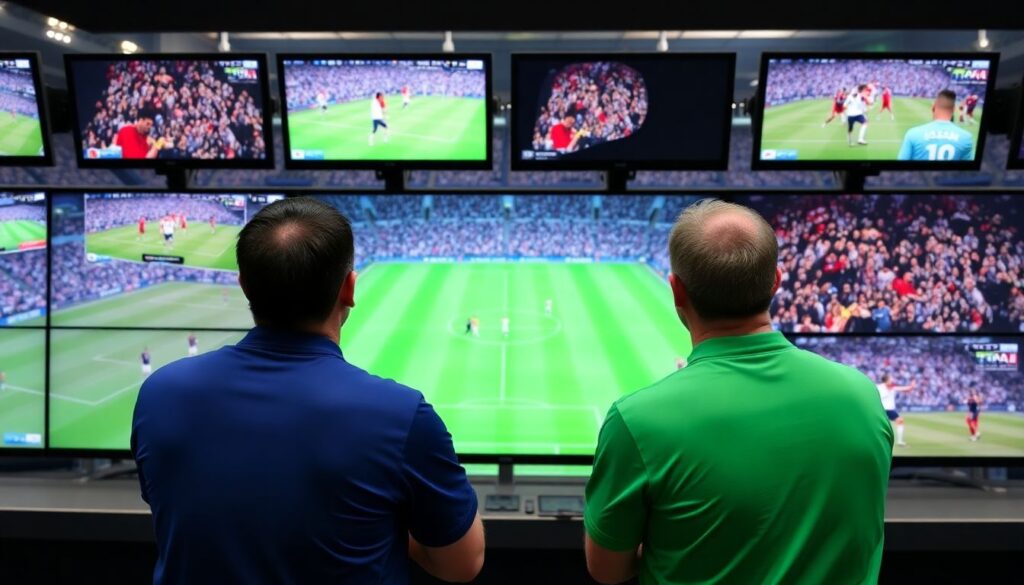
Even with VAR, people interpret footage; justice depends on process, not just cameras. Use this quick checklist to design or judge a VAR protocol with bias and consistency in mind:
- Define a narrow list of reviewable incidents and communicate it clearly to teams and fans; avoid expanding it ad hoc under media pressure.
- Set a strict «clear and obvious» threshold and train both VARs and referees on concrete video examples that illustrate what meets or fails that bar.
- Standardise camera angles and replay speeds for key incidents so that every referee sees similar evidence before making decisions.
- Rotate VAR officials across teams and stadiums to dilute subconscious loyalties or regional biases, tracking patterns over time.
- Require short, public post‑match explanations for the most controversial reviews to align internal reasoning with external perception.
- Monitor data on interventions by team and by referee to detect outliers that may signal bias, over‑intervention, or under‑use of the system.
- Invest in joint training sessions where players, coaches and referees discuss clips together, reducing mistrust about how footage is interpreted.
Impact on Game Flow, Spectacle and Competitive Balance

Technology can improve justice yet damage spectacle if misused. These are frequent mistakes in implementing VAR that affect rhythm and competition balance, especially relevant for Spain where opiniones sobre el VAR en la liga española are often polarised:
- Letting reviews expand beyond the specific incident (for example, re‑refereeing the whole build‑up instead of the factual offence).
- Using excessive slow motion for contact decisions, which can exaggerate minor touches and lead to harsher sanctions than intended.
- Failing to apply time‑added‑on consistently for long reviews, making players and fans feel that delays «disappear» from the clock.
- Allowing different refereeing crews to apply the «clear and obvious error» standard in radically different ways week to week.
- Neglecting communication in stadiums, so fans only see long pauses with no explanation, fuelling conspiracy theories.
- Over‑protecting referees from public accountability, which undermines trust in the system’s ability to deliver more justice than the pre‑VAR era.
- Ignoring cumulative season effects: even small biases in how reviews are triggered can tilt title races or relegation battles.
- Copy‑pasting protocols from other leagues without adapting to local style of play, crowd culture, and media environment.
- Assuming that adding more technology will automatically solve trust issues, instead of treating transparency and education as core design elements.
Persona-Based Perspectives: Players, Referees, Clubs and Fans
There is no single «best» VAR setup; the optimal balance depends on who you are in the football ecosystem and what you value most.
- Player perspective: Best with a Hybrid or Proactive model that strongly protects safety and corrects clear injustices in goals and red cards, while keeping some rhythm to avoid constant cooling of intensity.
- Referee perspective: Best with a disciplined Basic VAR that supports them on clear errors without taking over subjective judgement, combined with strong training and post‑match backing from institutions.
- Club executive perspective: Best with a Hybrid model that maximises predictable, season‑long fairness (especially for promotion, European spots and relegation), even if it requires investment in technology and specialist staff.
- Fan perspective: Best with a restrained, transparent VAR that intervenes mainly on goals and obvious scandals, communicates decisions clearly in‑stadium and on TV, and preserves the emotional spontaneity of celebrating a goal.
For many Spanish stakeholders trying to reconcile justice and spectacle, a carefully designed Hybrid model, leaning toward Basic VAR principles, often strikes the most acceptable compromise.
Concrete Questions Stakeholders Ask About VAR
Is football actually more «just» with VAR than before?
At the elite level, yes: clear, factual mistakes are corrected more often, especially in goals and offsides. However, justice remains imperfect because subjective calls still vary by referee, and new controversies emerge around how and when VAR should intervene.
Why do some fans in Spain still feel VAR is biased?
Because transparency and consistency have not fully matched expectations. When communication is poor and similar incidents get different outcomes, supporters interpret the system through club rivalries, shaping negative opiniones sobre el VAR en la liga española despite genuine accuracy gains.
What are the main ventajas y desventajas del VAR en el fútbol?
Advantages include fewer clear errors, better protection against unseen violence, and some reduction in big‑club bias. Disadvantages include delays, confusion around protocols, and a perception that technology can overrule football’s spontaneous emotion and the referee’s authority.
How does VAR justicia en el fútbol análisis differ between leagues?
Leagues with clear protocols, consistent training, and good communication see VAR as an aid to justice. Where governance is weaker or politics stronger, the same technology can deepen distrust. Context and implementation are as important as the cameras themselves.
Cómo afecta el VAR a la justicia en el fútbol at season level?
Across a full season, VAR tends to smooth out extreme injustices, especially for mid‑table and smaller clubs that used to suffer more from missed big calls. Individual matches can still feel unfair, but the long‑term distribution of key decisions becomes more balanced.
Can we make VAR faster without losing fairness?
Yes, by narrowing the scope of review, prioritising objective decisions, standardising replay protocols, and using semi‑automated offside. The goal is to reduce unnecessary on‑field monitoring while still correcting the most impactful errors on goals, penalties and red cards.
What should be improved first in Spain’s use of VAR?
Clearer public explanations, tighter limits on subjective re‑refereeing, and more consistent application of the «clear and obvious» standard. These steps would reshape the perceived impacto del VAR en decisiones arbitrales de fútbol toward trust rather than suspicion.