Mundiales como espejos históricos: much more than “just football”
If you look closely, every World Cup is like a group photo of its time: who has power, who is excluded, who wants to show off, and who’s trying to resist. When people talk about *cómo la Copa del Mundo refleja la historia política mundial*, they’re not being poetic — they’re being literal. Stadiums, TV cameras, security systems and even match schedules are full of geopolitics.
In other words: if you want to understand the 20th and 21st centuries, you can start not with a textbook… but with a ball.
From fascist stadiums to global TV: a quick ride through history
Let’s sprint through the *historia de los mundiales de fútbol y geopolítica* in fast-forward.
Some snapshots:
– 1934, Italy: Mussolini uses the World Cup as a fascist showroom. Stadiums, flags everywhere, political pressure on referees — football as propaganda tool.
– 1978, Argentina: A military dictatorship hosts the tournament while running secret torture centers a few kilometers away from the stadiums. The world watches goals, not desaparecidos.
– 1990, Italy again: World Cup with the Berlin Wall freshly fallen and the Soviet bloc dissolving. Old Cold War narratives mix with new dreams of globalization.
– 2010, South Africa: First World Cup in Africa. Officially about “unity and celebration”, beneath that: debates about inequality, racial history and who really benefits from mega-events.
– 2018, Russia & 2022, Qatar: Soft power in HD. Petrostates and energy powers polishing their image while human rights organizations shout from the sidelines.
Once you see this pattern, it’s impossible to “un-see” it. The pitch is 105 x 68 meters — but the world around it is much bigger.
Two ways of looking at World Cups: ball vs. context
Approach 1: The romantic football-only vision
You know this one: tactics, goals, nostalgia, “pure passion”. In this approach, you watch Brazil–Italy 1970 and think only about Pelé’s genius, not about the political tensions inside Mexico or the Cold War in the background.
Pros of the “pure football” lens:
1. Easy entry point — anyone who likes football can connect.
2. Protects the joy of the game — you don’t need a PhD to enjoy a dribble.
3. Super emotional — stories focus on players, crowds, unforgettable moments.
Cons:
– It tends to erase victims: dictatorships, exploited workers, demolished neighborhoods.
– It hides why certain countries host and others never do.
– It ignores how broadcasting rights, sponsors and political pressure shape the tournament.
Romantic, yes. Complete, not really.
Approach 2: The political-analytical lens
Here, the match is just the tip of the iceberg. Scholars, journalists and curious fans use *libros sobre la historia política de los mundiales*, archives, declassified documents and interviews to ask uncomfortable questions:
– Who lobbied FIFA to get the hosting rights?
– What was censored on TV at the time?
– Who got rich — and who got displaced?
Pros of the “political” lens:
1. Helps connect sports to real life (wars, dictatorships, social struggles).
2. Exposes propaganda: 1934 Italy, 1978 Argentina, 2018 Russia, 2022 Qatar…
3. Turns football into a powerful case study in global history.
Cons:
– If overdone, it can drain all joy and feel moralizing.
– Risk of imposing politics where it doesn’t fit (not everything is a conspiracy).
– Requires a bit more context and reading than a short highlight video.
The most interesting conversations usually appear when both approaches talk to each other.
Mixed approach: watch the game, then zoom out
A more realistic and frankly more fun way: enjoy the match *first*, then ask, “OK, what was happening around this tournament?”
You can watch Maradona in 1986 and then dig into the Falklands/Malvinas, IMF, economic crisis and how English and Argentine media told radically different stories about that same quarterfinal.
This hybrid lens fits perfectly with a popular-science mindset: accessible, emotional, but not naïve.
Technology: from shortwave radio to total surveillance
Technology doesn’t just “transmit” the World Cup. It *curates* it. Different technologies highlight different power structures and political interests.
Old-school tech: radio, early TV and newspapers
In the mid‑20th century, radio commentators were reality-makers. A government could control a few national stations and shape the entire emotional climate.
Advantages back then:
– Easy to centralize messaging: state radio = state narrative.
– Limited recording and replaying gave governments plausible deniability: “That didn’t happen, you misheard”.
– Cheaper production meant even poorer countries could join the global conversation, but often under strict censorship.
Downsides:
– Very little space for alternative voices.
– International audiences depended on filtered coverage through big Western media.
– Visual evidence of repression or protests around stadiums was rare or easy to block.
Modern tech: multi-camera HD, big data and social feeds
Now we have 4K broadcasts, drones, VAR, real‑time stats, and millions of smartphones around every stadium. This sounds democratizing… but it’s not that simple.
Pros of current technology:
1. More documentation: it’s harder to fully hide abuses — workers’ conditions in Qatar, protests in Brazil 2014, for example.
2. Parallel narratives: along the official match feed, you get fan streams, activists’ clips, independent reporters.
3. Data for counter‑analysis: researchers can study traveling flows, security perimeters, or propaganda patterns using open data.
Cons and dark sides:
– Surveillance capitalism and policing: biometric scanners at stadium gates, face recognition, predictive policing around fan zones — often justified as anti‑terror “security”.
– Information overload: scandals burn fast and disappear even faster; five new controversies replace the old one in hours.
– Platform control: a handful of companies and governments can still downrank or block uncomfortable content.
In geopolitical terms, the tech question becomes: who controls the cables, the satellites, the platforms, the data centers — and whose story gets priority?
How to “study” geopolitics through World Cups without getting bored
Step-by-step strategy for curious fans
Here’s a simple way to transform your fandom into an informal crash course in global politics.
1. Pick one tournament.
For example, 1974 West Germany, 1998 France, or 2010 South Africa.
2. Watch at least one full match, not just highlights.
Pay attention to what commentators say about context: “historic rivalry”, “post‑colonial matches”, “political tension”.
3. Look for one good background source.
This could be one of many *documentales sobre mundiales de fútbol y guerras* or a podcast episode about that year.
4. Add one critical angle.
Maybe the urban geography (which neighborhoods were upgraded), or the labour dimension (who built the stadiums), or the diplomatic angle (which leaders attended the final).
5. Ask: who wins off the pitch?
Sponsors? Government? Local elites? Opposition movements getting visibility? Often, the “scoreboard” outside the stadium is very different from the one on it.
Slowly, you’ll recognize recurring scripts: authoritarian regimes using mega‑events, post‑colonial narratives, or late‑capitalist “festivalization” of cities.
Learning options: DIY and structured
If you want more structure than just Google and YouTube:
– Some universities now offer *cursos online de historia del fútbol y geopolítica*, mixing sports history, international relations and media studies. They’re great if you like syllabi and guided reading.
– If you’re more of a reader, there are outstanding *libros sobre la historia política de los mundiales* that blend storytelling and serious research. Look for authors who use archives, not just anecdotes.
– For image‑driven learners, go hunt *documentales sobre mundiales de fútbol y guerras* that don’t just glorify goals but show how conflicts, boycotts and propaganda shaped the tournaments.
Combine all three and you get a surprisingly robust toolkit — almost like a “people’s geopolitics lab”, starting from a match replay.
How to choose your own angle: comparison of different “research styles”
Style 1: The historian-reader

You’re happy with long‑form writing and footnotes.
Pros:
– Deep context; you see long‑term patterns across decades.
– You can cross‑check sources and avoid myths.
Cons:
– Slower, requires patience.
– Risk of staying abstract and forgetting the emotional core of the game.
Good for: understanding big arcs like decolonization, Cold War, or post‑9/11 security climate and how they show up in stadiums and FIFA decisions.
Style 2: The documentary binge-watcher
You prefer moving images and narrative arcs.
Pros:
– Visual evidence of crowds, leaders, public spaces.
– Often easier to share with friends and family.
Cons:
– Sometimes simplified or biased depending on funding.
– Emotional editing can push you to accept a particular narrative.
Good for: sensing the “mood” of a tournament — optimism in 1998 France, tension in 1978 Argentina, spectacle and control in 2018 Russia.
Style 3: The data-and-tech nerd
You like open data, maps, and tech critique.
Pros:
– You can visualize flows of fans, money, broadcasting rights.
– You’re well placed to analyze surveillance and digital propaganda.
Cons:
– Without historical reading, you can misinterpret the numbers.
– Data doesn’t “speak” by itself — it needs context.
Good for: analyzing recent and future World Cups, where digital infrastructure is as important as stadiums.
In reality, you can mix these three styles: read, watch, and then play with data. That’s how the *historia de los mundiales de fútbol y geopolítica* feels less like homework and more like an exploration game.
Pros and cons of new World Cup technologies in geopolitical terms
Let’s zoom specifically into “tech” as a political actor.
Broadcast tech and streaming
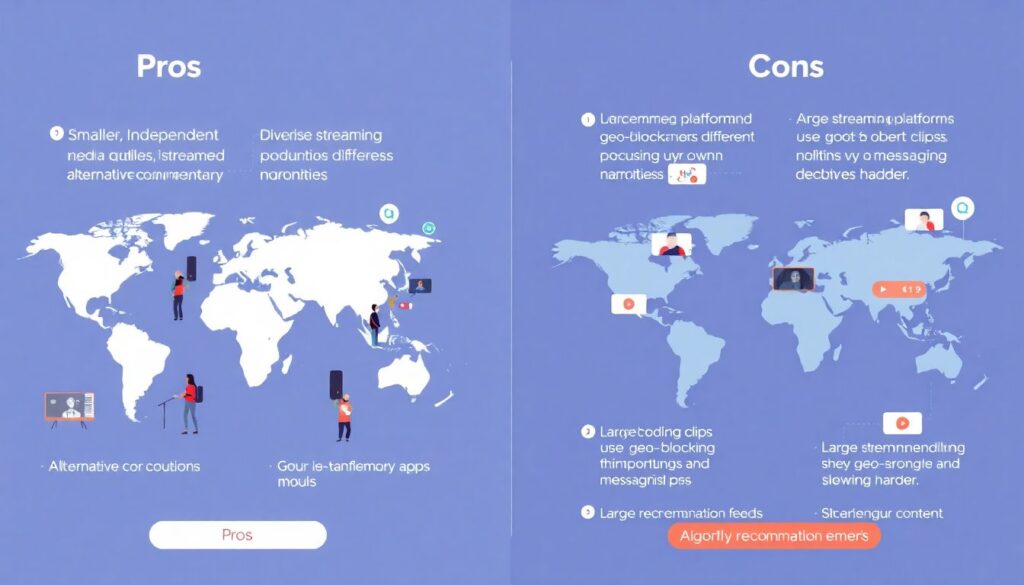
Pros:
– Smaller media outlets can stream alternative commentary.
– Diasporas can produce their own narratives across borders.
– Censorship is harder when clips fly across messaging apps in seconds.
Cons:
– Big streaming platforms can geo‑block or throttle content.
– Algorithmic recommendations tend to prioritize sponsor‑friendly, apolitical material.
– States can pressure platforms to remove protest footage or “political messages”.
Security tech and digital control
Pros (from a security perspective):
– Faster reaction to real threats (terror attacks, hooliganism).
– Easier crowd management and emergency interventions.
Political cons:
– Infrastructure rarely disappears after the tournament; it’s integrated into everyday policing.
– Face recognition and big databases are often built with murky procurement and little oversight.
– Marginalized communities usually bear the brunt of “new” security doctrines.
In practice, the same cameras that track a pitch invasion today can monitor demonstrations next year.
Looking ahead: World Cup 2026 as a mirror of a fragmented world
What makes 2026 special
The 2026 World Cup — spread across the United States, Mexico and Canada — is being organized in a world very different from 1994 or even 2014. A few trends stand out:
1. Tri-national hosting as diplomatic theater
The joint organization will be presented as evidence of North American cooperation. But underneath, you have tensions over migration, trade, border security and climate policies. Stadiums in border states will carry extra symbolism.
2. Migration and identity at center stage
National teams increasingly built from diasporas will play in countries defined by immigration tensions. Expect heated debates around dual nationality, fan identity and who “belongs” where.
3. Climate crisis and “greenwashing”
Organizers will talk about “sustainability”, but large-scale air travel, new constructions and energy-intensive events are hard to square with climate targets. The geopolitics of energy and carbon markets will be in the background of every “green” marketing slogan.
4. Platform geopolitics
Unlike previous decades, streaming and social media are already arenas of US–China–EU tech rivalry. Expect fights over data, moderation rules, and the role of non‑Western platforms covering the tournament.
Technological and political trends to watch in 2026
– AI‑driven analytics and refereeing
Advanced VAR and automated offside lines will raise new trust questions. Who designs the algorithms? Who has access to the data? Biased systems in banking and policing won’t magically be neutral on the pitch.
– Hyper‑segmented broadcasts
Viewers might get “personalized” coverage: different camera angles, tailored stats, localized ads. This could also mean different narratives by region — subtle but powerful propaganda customization.
– Smart cities and post‑tournament legacy
Host cities will develop or expand “smart” infrastructures: sensors, cameras, integrated control rooms. The key political question: will local citizens have any say over how this infrastructure is governed after the World Cup?
In short, the 2026 World Cup will not just reflect geopolitics — it will actively rehearse future conflicts over borders, data, identity and the climate.
Unusual ways to engage: beyond watching and complaining
Let’s end with some non‑standard, practical ideas so you don’t stay as a passive consumer of spectacle.
Five unconventional projects you could actually try
1. Create a “political match commentary” podcast with friends
Pick iconic games and re‑watch them while talking not only about tactics, but about coups, elections, wars and social movements around that match. Use accessible language, like a watch‑party with context.
2. Map your own city’s World Cup footprints
Even if your city never hosted a game, there are bars, immigrant communities, murals, old TV repair shops that thrived in certain tournaments. You’re basically building a micro‑history from below.
3. Build a small open archive of local memories
Interview relatives and neighbors about where they watched past World Cups, what was happening politically in your country at that time, what people feared or hoped for. Digitize, annotate, and share.
4. Design a mini‑syllabus for friends or students
Mixing *cursos online de historia del fútbol y geopolítica*, a couple of key articles, and some documentaries, put together a 4‑week “home course”. One tournament per week, one angle (colonialism, Cold War, globalization, digital age).
5. Follow one single theme across all tournaments
For example: surveillance, anti‑racism protests, women’s participation in stadiums, or labor rights. Track how that one theme evolves from Uruguay 1930 to 2026. It forces you to connect dots in original ways.
These projects turn the World Cup from a giant TV event into a long-term research playground where you’re not just a spectator, but a co‑author of its meaning.
—
If we take football seriously — not solemnly, but seriously — each World Cup becomes a moving X‑ray of the international order. Media, architecture, police, migration, propaganda, technology: it’s all there, condensed into one month.
Once you start reading tournaments this way, you don’t lose the magic of the game. You just discover that, behind every goal, there’s a whole world running onto the pitch.
Комментарии