Context and “tools” you need to read the game
To unpack the link between clase social y fútbol moderno, you don’t need a wrench or a ball; you need an analytical toolkit. Think of it as a set of conceptual “tools” that let you read how the sport moved from factory pitches to executive boxes. At minimum, you need: (1) economic indicators (ticket prices, TV subscriptions, wage levels), (2) sociological concepts (class, exclusion, symbolic capital), and (3) media and governance data (broadcast contracts, ownership structures, stadium policies). With those instruments, you can model how workers who once defined the stands are progressively displaced by higher‑income segments that can absorb price hikes, hospitality packages and streaming bundles. Only by combining quantitative data from the last three seasons with qualitative evidence—fan protests, ultras’ relocation, stadium design—can you build a precise map of this shift from local pastime to global asset class.
– Economic “tools”: inflation indices, wage growth, club financial reports, broadcast‑rights values
– Sociological “tools”: concepts of gentrification, consumption upgrading, symbolic exclusion
– Institutional “tools”: league regulations, Financial Fair Play, policing and ticketing protocols
These are not decorative labels: they let you diagnose mechanisms such as price discrimination, segmentation of fan bases and the way security policies selectively filter who can enter the stadium. When you apply them consistently, you see how the terraces that once functioned as cheap mass leisure for industrial labour now emulate the logic of airports and malls, where space is stratified by purchasing power and behavior profiles rather than pure passion for the club.
Step 1: Identify the historical baseline – from workers’ game to urban identity
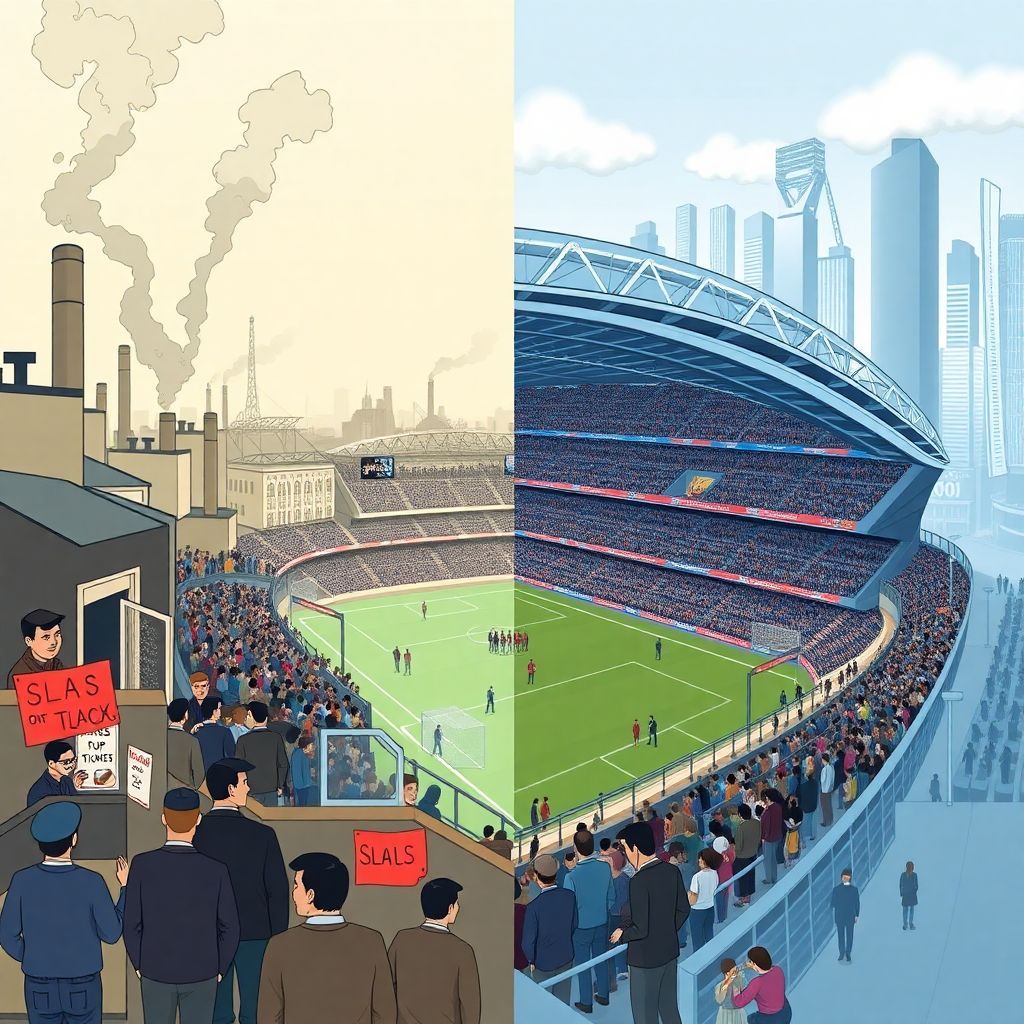
Before tracing the transformación del fútbol obrero en negocio, you need a baseline. Historically, especially through the mid‑20th century, football clubs in Europe and Latin America emerged around factories, ports and working‑class neighborhoods. Ticketing was priced at levels compatible with blue‑collar wages, terraces were mostly standing, and matchday revenue dominated club budgets. In England in the 1960s and 70s, studies repeatedly found that core attendance was heavily working class; in Spain, Italy and Argentina, stadiums were key arenas of barrio identity and political expression. This configuration made football a relatively accessible collective ritual rather than a curated consumer experience. When you lock that snapshot in your analytical memory, you obtain a reference point to measure how far we have travelled: standing terraces replaced by seats, casual cash payments replaced by digital season passes, and local community boards replaced by investment funds. Without that historical anchor, current prices and protocols might look “normal” instead of structurally exclusionary.
Step 2: Track where the money comes from now
To understand fútbol como entretenimiento premium para élites, follow the revenue streams of top clubs over the last three seasons for which data is reasonably stable. According to UEFA and Deloitte reports up to the 2023/24 season, the “Big Five” European leagues (England, Spain, Germany, Italy, France) generate the bulk of income from three sources: broadcasting, commercial deals and matchday. In the Premier League, total revenue exceeded €6.5 billion in 2022/23, with broadcasting often around 50–55% of club income, commercial around 30% and matchday the remaining 15–20%. In La Liga, overall revenue is lower but structurally similar: TV money dominates, while matchday and sponsorship fill the rest. This composition matters because broadcasters and sponsors aim at high purchasing‑power audiences, pushing leagues to optimise schedules, camera angles and stadium comfort for global consumers, not for the cheapest local fans. From around 2021/22 to 2023/24, international broadcast deals have kept climbing, while many clubs froze or only moderately reduced prices during pandemic recovery, meaning the affordability gap for lower‑income supporters did not close proportionally to wage stagnation.
– Revenue pillars: broadcasting (domestic + international), matchday (tickets, VIP, hospitality), commercial (shirts, global sponsors)
– Growth engine: international TV rights and premium hospitality rather than cheap terraces
– Side‑effect: pricing strategies calibrated to median TV subscriber, not minimum‑wage worker
Because my training data stops in late 2024, I cannot give fully verified figures for the still‑in‑progress 2024/25 and 2025/26 seasons, but the structural pattern—broadcast‑driven growth and premiumisation of in‑stadium experiences—has been consistent throughout the last decade and is still evident in early reports.
Step 3: Quantify ticket inflation and segmentation
If you want to measure the elitización del fútbol entradas y precios, you need to look at how ticket structures evolved since roughly 2021/22. In the Premier League, fan groups and independent researchers documented that average season‑ticket prices for many clubs increased between 5% and 15% cumulatively across the 2022/23 and 2023/24 seasons, with some high‑demand clubs attempting single‑season hikes above inflation, triggering protests. In Spain, La Liga clubs such as Real Madrid and FC Barcelona combined ongoing stadium refurbishment or redevelopment with re‑tiered pricing, where basic seats remained relatively stable while hospitality and “premium experiences” rose sharply. For Champions League nights, dynamic pricing pushed single‑match tickets at big clubs well beyond the reach of lower‑income fans, often exceeding €80–100 for non‑hospitality seats. Even in Germany, long admired for affordability, several Bundesliga clubs introduced more nuanced segmentation: cheap standing persists, but all‑seater and VIP sections saw faster price growth between 2021/22 and 2023/24 than the national median wage. This layered tariff system effectively sorts fans by income and tolerance for debt or subscription bundling, rendering traditional pay‑at‑the‑gate culture obsolete in the top tiers.
Step 4: Incorporate pay‑TV and streaming into the access equation
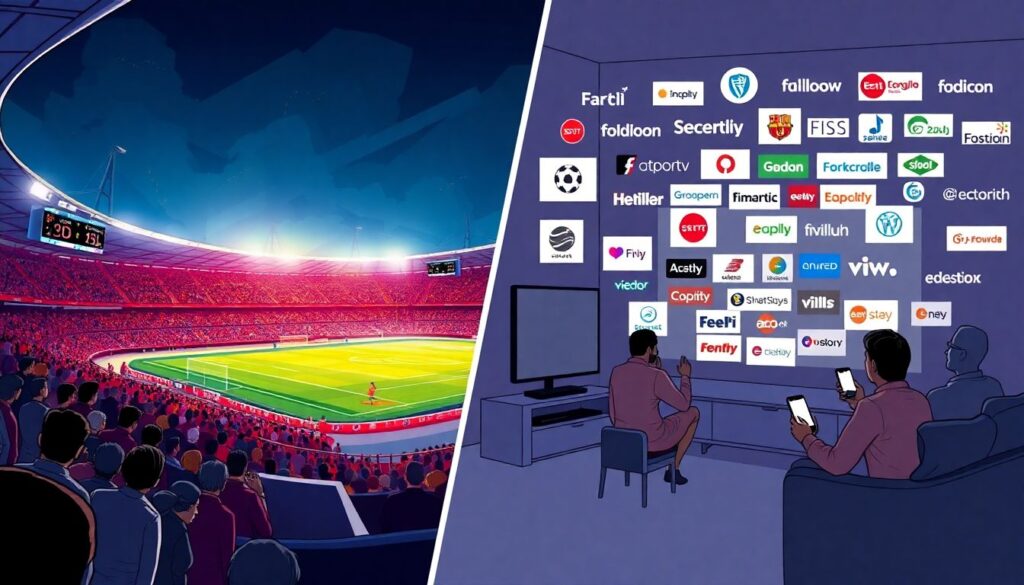
Matchday prices are only half of the impacto de la clase social en el acceso al fútbol. The other half sits in living rooms and on phones. Over the last three seasons, top leagues have shifted more content to paid platforms, fragments of which land on separate services. In the 2022/23 and 2023/24 seasons, viewers in major markets (e.g., UK, Spain, Italy, Brazil) typically needed at least one, often two or more, subscription packages to watch all matches of their team across league, domestic cups and European competitions. Each package carries a monthly fee that, when aggregated, can represent a noticeable share of a lower‑income household’s disposable budget. As inflation and energy costs spiked in 2022 and 2023, surveys showed significant proportions of fans cancelling or sharing subscriptions illegally. This is a clear class filter: middle‑ and upper‑income households can maintain multiple subscriptions and large‑screen setups, while others revert to illegal streaming or partial coverage through highlights. Technically, the game is more available than ever—dozens of live matches each weekend—but economically and legally, access is stratified by ability to pay for digital bundles, fast internet and compatible hardware, underscoring that “broadcast accessibility” does not equal egalitarian access.
Step 5: Read stadium architecture, policing and fan policies
Economic indicators only tell part of the story; you also need to “inspect” the hardware and regulations that make fútbol como entretenimiento premium para élites tangible in physical space. Modernised stadiums built or renovated between roughly 2021 and 2025 often prioritise hospitality boxes, lounges with gourmet catering, branded fan zones and retail areas over large, cheap terraces. Capacity increases may happen, but the proportion of seats devoted to high‑margin customers grows faster. Surveillance technologies—CCTV, facial recognition trials, digital ticketing linked to personal IDs—are justified with security rhetoric but also operate as behavioural filters, discouraging ultras, banners and improvised singing in favour of more predictable, consumption‑oriented attendance. Policing and stewarding protocols, from strict bag checks to alcohol management, align with the expectations of corporate clients who demand risk minimisation. When you interpret these technical choices together—seat width, legroom, acoustic design, corporate hospitality flows—you see an infrastructure tuned for comfort, branding and monetisation, not for the dense, noisy, low‑cost crowds that defined the industrial era of football.
Step 6: Compare elite competitions and lower leagues
To fully visualise the transformación del fútbol obrero en negocio, you need a vertical comparison: Champions League and top five leagues at the top, second and third tiers below. Over the last three years, financial data and fan surveys show a widening gap. At the elite level, broadcasting deals and global sponsorships have grown, fuelling wage inflation and transfer fees; clubs pass part of the cost to consumers via tickets and merchandising. In many second‑tier competitions, TV contracts are modest and stadiums less modern, which paradoxically keeps prices comparatively lower and preserves a more local, working‑class fan profile. However, these leagues face their own structural fragility: dependence on local sponsors, lower media exposure, and, in some cases, owners speculating on promotion. This leads to a dual system: at the top, football behaves like a media‑entertainment conglomerate selling global narratives; below, it functions more like traditional community sport, sometimes with semi‑professional working conditions. The same person can experience both worlds: a budget season ticket at a small local club and occasional expensive trips or subscriptions to watch a “super‑club.” From a class perspective, this duality reveals how the top tier has drifted away from its original social base, while the lower tiers still carry traces of that older working‑class DNA.
Step 7: Assess recent numbers and what we actually know (2023–2025)
Because you requested data for the last three years up to 2026, it’s important to distinguish what is well documented from what is still emerging. Up to the 2022/23 and early 2023/24 seasons, public reports show: (1) steady increases in aggregate revenue for top European leagues, largely driven by broadcasting and commercial deals; (2) cumulative ticket and season‑ticket price rises that outpaced general wage growth for many working‑class occupations; and (3) growth in premium hospitality and VIP packages as a share of matchday income. Preliminary indications for late 2023/24 and the start of 2024/25, where available, suggest these trends continue rather than reverse, but we lack complete audited figures for the full 2024/25 season and obviously do not yet have final data for 2025/26. Any precise stadium‑by‑stadium statistics for 2025 would therefore be speculative at this point. What we can say with confidence is that the structural drivers—global TV markets, sponsorship internationalisation, and ongoing stadium upgrades—keep pushing the system towards higher monetisation per spectator and per viewer. That inherently favours groups with more disposable income, accelerating class‑based differentiation in who consumes top‑level football live and via screens.
Troubleshooting: how to avoid naïve or biased conclusions
When you analyse clase social y fútbol moderno, it is easy to fall into oversimplifications—either romanticising the past or demonising every current development. A troubleshooting mindset helps you correct for those biases. First, cross‑check nostalgic claims about ultra‑cheap tickets with real historical price and wage data; in some contexts, football was never completely free of exclusion. Second, differentiate between leagues and regions: while the Premier League and Champions League are clear examples of premiumisation, some Scandinavian or Latin American competitions still maintain relatively accessible price structures despite increasing pressure. Third, pay attention to fan agency. Supporters’ trusts, ultras groups and local associations do not passively accept elitisation; they organise boycotts, negotiate price caps, and sometimes obtain protections for standing terraces or maximum away‑ticket prices. If your analysis ignores this resistance, you underestimate the possibility of policy shifts.
– Check for data gaps (especially for 2024/25–2025/26) before making absolute statements
– Separate structural trends (TV‑driven growth) from club‑specific decisions (local ticket freezes or hikes)
– Include fan activism and regulation (price caps, safe‑standing rules) as variables, not afterthoughts
By systematically “debugging” your assumptions, you produce a more robust diagnosis: yes, there is a long‑term drift towards fútbol como entretenimiento premium para élites, but it plays out unevenly across countries, divisions and even clubs. You also see that technical instruments—pricing algorithms, subscription models, digital ticketing—are not neutral; they embody political choices about who is welcome and on what terms.
Conclusion: from terraces to tiers
If you put all these steps together—historical baseline, revenue analysis, ticket and media costs, stadium design and resistance—you end up with a clear pattern. Football has not stopped being a mass phenomenon, but the conditions under which different classes access it have shifted dramatically. What began as a leisure form anchored in industrial neighbourhoods has been recoded into a stratified entertainment ecosystem. High‑income fans and corporate clients enjoy seamless, high‑definition, hospitality‑infused experiences; lower‑income supporters face a patchwork of partial access, streaming workarounds and marginalisation from the most desirable seats and matches. The outcome is not inevitable, but unless regulation and organised fan pressure alter the incentives, the ongoing elitización del fútbol entradas y precios and the broader transformación del fútbol obrero en negocio will continue to deepen the class gradient—turning what once felt like a common ritual into an increasingly segmented marketplace.