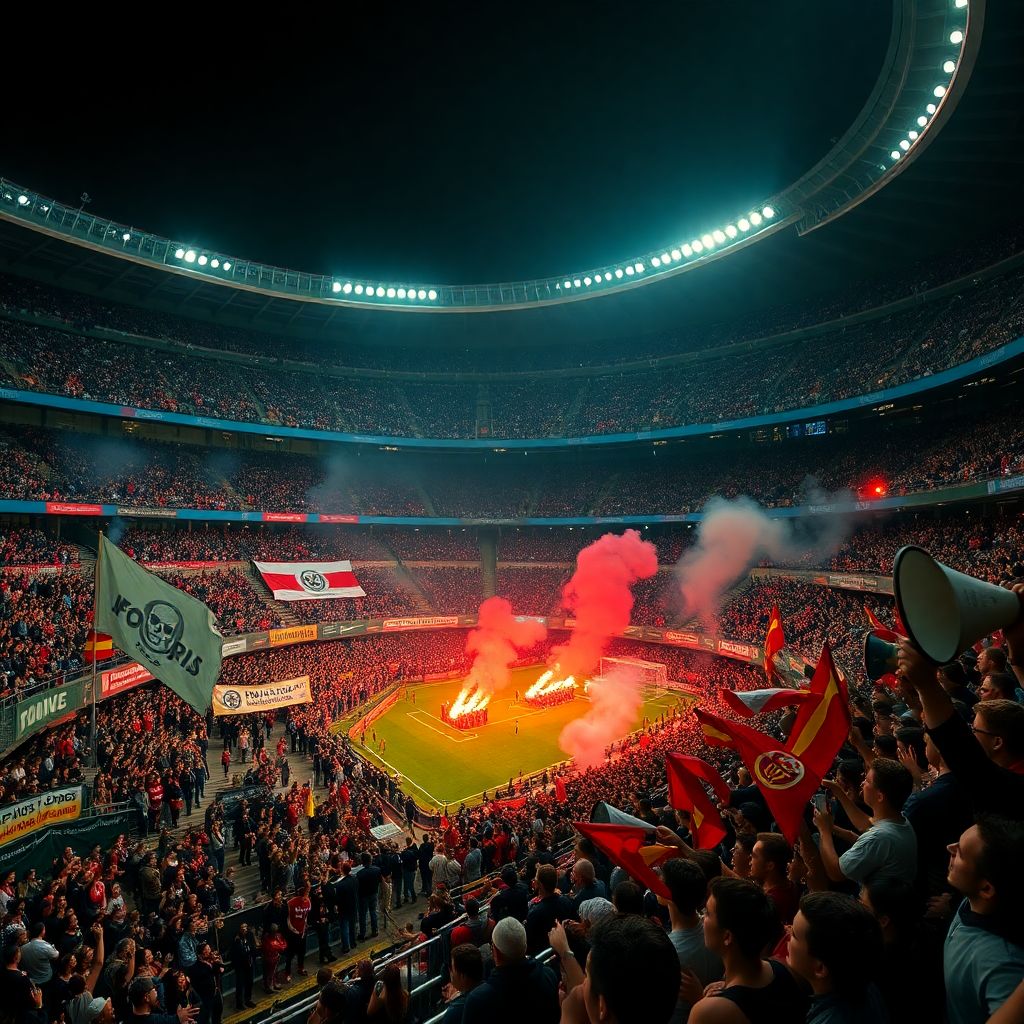
Why talk about ultras and barras bravas in 2026?
Ultras and barras bravas have changed a lot in the last 20 years. They’re no longer just “the noisy end of the stadium”: they’ve become political actors, micro‑businesses, online communities and, in some contexts, organized crime partners.
If you want to understand contemporary football culture, you need to understand how violence, belonging and identity are being negotiated inside these groups today — in the stands, in the streets and on social media.
In this guide we’ll go step by step:
1. What ultras and barras bravas actually are (beyond stereotypes).
2. How violence works sociologically (not just as “aggressiveness”).
3. Why belonging and identity are so powerful in football.
4. What has changed in the 2020s (platforms, politics, money, repression).
5. Typical mistakes when studying or talking about these groups.
6. Practical tips if you’re starting research or just trying to “read” the stands better.
Along the way, I’ll point you to the kind of sources you’d look for if you were reading a violencia en el fútbol barras bravas y ultras libro, a tesis sociología violencia en el fútbol barras bravas pdf or a more visual documental sobre barras bravas y violencia en el fútbol streaming.
—
Step 1: Defining ultras and barras bravas without clichés
Ultras vs barras bravas: same universe, different histories
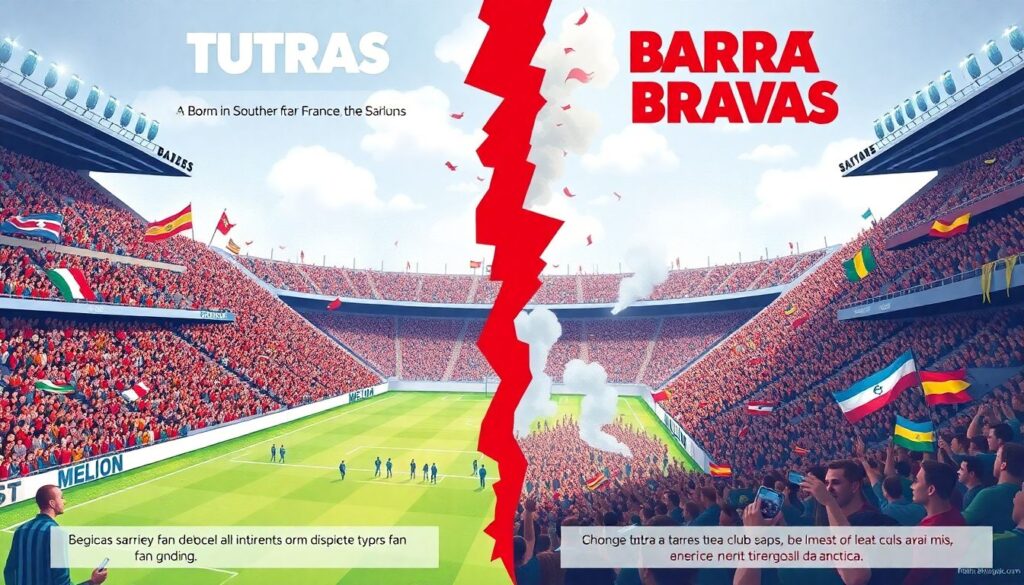
Very roughly:
– Ultras: born in Southern Europe (Italy, later Spain, France, Balkans). Focus on choreography, constant singing, visual identity, political banners.
– Barras bravas: rooted in Latin America (Argentina, later spread to Chile, Colombia, Mexico, etc.). Stronger historical ties to clientelism, informal economies and club politics.
Both share common features:
– A “territory” inside the stadium (the curva, the popular, the end).
– A strong hierarchy (leaders, lieutenants, rank‑and‑file).
– A dense set of rituals (chants, away trips, banners, tattoos).
– A reputation for controlling access to “real” fan status.
Sociologically, you can think of them as *subcultures with teeth*: they create style, meaning and community — but they also monopolize certain forms of violence and influence.
Beyond the “hooligan” stereotype
Reducing everything to “thugs who like to fight” misses the point. When you look at estudios académicos sobre identidad futbolera y barras bravas, three key ideas keep appearing:
– They produce *identity*: who belongs, who doesn’t, what it means to be “one of us”.
– They manage *emotion*: turning frustration, pride and humiliation into collective energy.
– They operate as *intermediaries*: between fans and clubs, fans and police, even fans and local politicians.
Violence is part of the picture, but it’s not random. It’s regulated, signalled and often negotiated in advance.
—
Step 2: How violence actually works in these groups
Violence as a social resource, not just a problem
From a sociological point of view, violence has at least four functions for ultras and barras:
1. Internal cohesion
Shared risk creates trust. Going to a dangerous away trip, standing your ground in a clash, or even just *knowing* you could be attacked, strengthens bonds.
2. Reputation and status
Groups gain prestige through feared reputation. Inside the group, “front‑liners” gain status by being ready to fight, but also by showing loyalty, discipline and reliability.
3. Territorial control
Violence is used to control stands, access routes, sometimes entire neighbourhoods. This “ownership” can later be monetized (ticket reselling, parking, informal protection).
4. Political leverage
Leaders can promise to “keep the peace” or, conversely, threaten disorder. That gives them bargaining power with clubs, parties, sometimes city governments.
Modern twist: from street fights to platform wars
In 2026, a big part of the escalation happens *before* people meet physically. Social media have re‑wired how conflict emerges:
– Telegram and WhatsApp groups coordinate movements, flash‑mobs, surprise attacks.
– Instagram and TikTok are used to stage masculinity and dominance through ultra‑aesthetic clips.
– Leaks and voice notes are used to discredit rival factions inside the same barra.
The classic “rumour in the bar” has become “viral post in the group chat”. The speed and amplification of conflict are different — and harder to control.
—
Step 3: Belonging — why people join and stay
The emotional side of being ultra
If you’ve never been part of such a group, the attraction can seem irrational. But for many members, ultras and barras provide:
– A clear identity (“I’m not just a fan; I’m *X*”).
– A ready‑made social network (friends, support, even small jobs).
– A sense of purpose (planning trips, choreographies, confrontations).
– Recognition that might be absent at home, work or school.
For a lot of young men in precarious contexts, this is not just “fandom”; it’s a life script.
Belonging as a long initiation
Joining is rarely instant. You go through stages:
1. Peripheral participation: singing, following, copying style.
2. Task‑based involvement: carrying drums, helping with banners, doing minor errands.
3. Trusted membership: access to meetings, travel planning, inner jokes.
4. Potential leadership: controlling sub‑groups or specific “business areas”.
Each step includes tests of loyalty and reliability, sometimes including controlled exposure to violence. The process is similar to a lot of youth subcultures, but the stakes here are higher.
—
Step 4: Identity — how football shapes “who we are”
From club colours to full social identities
Identity in these groups is layered:
– Club identity: shared colours, myths, “we vs them” narratives.
– Barrabrava / ultra identity: codes, chants, style, internal nicknames.
– Territorial identity: neighbourhoods, cities, regions represented in the group.
– Political or ideological identity: from far‑right to anti‑fascist, from nationalist to regionalist, depending on country and club.
In practice, a chant or a banner can condense all of this at once: class resentment, local pride, historical grievances and present‑day politics.
Identity under surveillance and commercialization
In the 2020s, clubs and leagues have tried to “package” fan identity into something sellable and TV‑friendly. At the same time, states ramped up control, with:
– Facial recognition in stadiums.
– Blacklists of banned fans.
– More intense police intelligence.
This double pressure (market + surveillance) has pushed some ultras and barras to reframe their identity as “last defenders of real football” against “modern football” and corporate leagues, even when they’re also negotiating money deals with the same institutions.
—
Step 5: What has changed in the 2020s (up to 2026)
1. Digitalization of the stands
The biggest shift: the stands are now *always online*. Clips travel faster than police reports. This has several consequences:
– Groups curate their image like brands: logos, slogans, highly edited videos.
– Internal conflicts are “performed” online to win sympathy from broader audiences.
– Evidence of crimes spreads as quickly as propaganda, complicating repression and making denial harder.
If someone were to design a curso online sociología del fútbol barras bravas ultras today, a full module would have to be about platform cultures: memes, “calling out”, livestreamed clashes, doxxing.
2. Hybrid economies
Classic income streams (ticket reselling, parking, extortion inside the stadium) have been mixed with:
– Street merchandise that mimics official club gear.
– Influencer‑style monetization: donations, subscriptions for exclusive content.
– Partnerships with local businesses for visibility and “protection”.
This economic diversification makes some groups less dependent on club favours — but also more embedded in wider informal economies, sometimes overlapping with drug markets and other criminal circuits.
3. Gender dynamics are shifting
Female participation has grown, but in very uneven ways.
– In some clubs, women have formed their own sub‑groups within ultras, demanding visibility and challenging macho rituals.
– In others, they’re tolerated as “supporting roles” (logistics, design, media), but kept away from leadership or direct confrontation.
– Online, female ultra accounts have become key for narrative control, both supporting and criticizing male leaders.
Identity is still heavily masculinized, but research since the early 2020s shows growing cracks in the old “men fight, women watch” model.
4. Post‑pandemic control and normalization
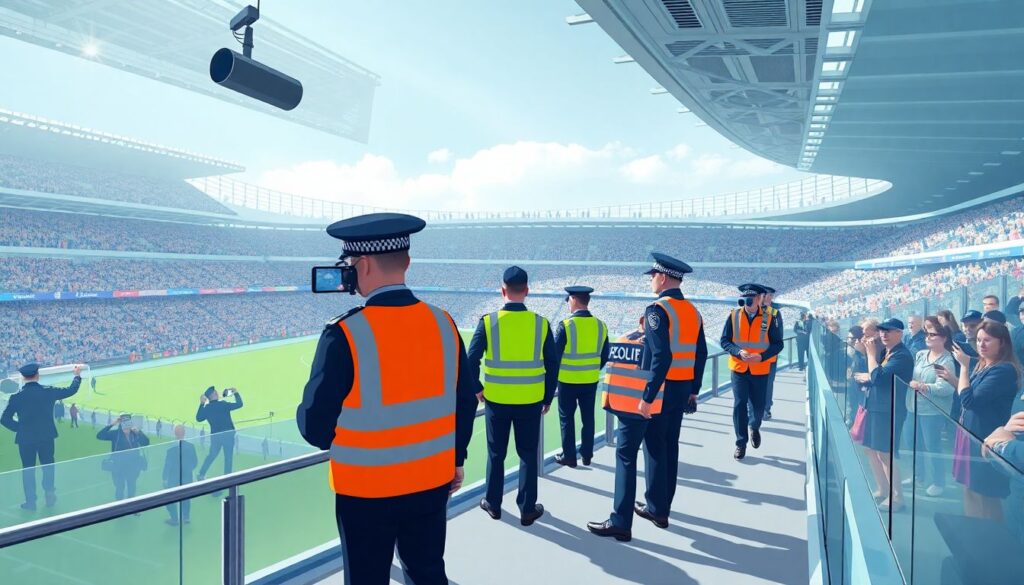
After COVID‑19, many countries used health and security arguments to introduce tighter controls that stayed even when stadiums reopened. By 2026:
– Some leagues rely on almost fully personalized ticketing, which makes anonymity harder.
– Collaborations between clubs and police are more formalized (data sharing, joint task forces).
– The “acceptable” ultra style is domesticated: loud, colourful, but less autonomous.
This doesn’t kill barras and ultras; it pushes them to adapt, split or radicalize in different directions.
—
Step 6: Common mistakes when talking about ultras and barras
Mistake 1: Moral panic instead of analysis
Reducing everything to “we should ban them” might feel satisfying, but it doesn’t explain:
– Why new groups keep forming when old ones are banned.
– Why some groups become less violent under certain club or city policies.
– Why many “ordinary fans” still respect or even admire them.
A good violencia en el fútbol barras bravas y ultras libro will combine moral concern with structural analysis: economics, politics, urban geography, media.
Mistake 2: Romanticizing “pure passion”
On the other side, some people idealize ultras as “authentic people’s culture” and ignore:
– Internal violence (against their own members).
– Predatory practices on vulnerable fans.
– Links with far‑right or criminal organizations in some countries.
Both extremes — demonization and romanticization — hide the complexity that real sociological work needs.
Mistake 3: Ignoring local context
An Italian curva is not an Argentine popular, and a Scandinavian ultra group is not a Colombian barra.
Be careful with:
– Copy‑pasting models from English “hooliganism” to totally different realities.
– Using European experiences to interpret Latin America, or vice versa, without adjustments.
– Forgetting how local politics, policing styles and club ownership shape group behaviour.
Most serious tesis sociología violencia en el fútbol barras bravas pdf documents insist on deep local fieldwork for exactly this reason.
—
Step 7: How to start studying ultras and barras in a serious way
For beginners: where to look first
If you’re just starting to explore this topic — as a student, journalist or simply a curious fan — a good path could be:
– Watch: Choose a documental sobre barras bravas y violencia en el fútbol streaming from different countries (e.g., one from Europe, one from South America) and compare narratives.
– Read: Look for estudios académicos sobre identidad futbolera y barras bravas from sociology, anthropology and criminology; they often disagree, which is productive.
– Listen: Follow podcasts or fan channels where members speak in their own words, not just in news headlines.
Methods that actually work
Useful sociological tools include:
– Ethnography: spending time with fans in and around the stadium, not just during big games.
– Interviews: with members, ex‑members, police, club officials, neighbourhood residents.
– Media analysis: tracing how newspapers, TV and social platforms frame these groups.
– Historical work: understanding how today’s group grew from older fan cultures.
If someone organized a solid curso online sociología del fútbol barras bravas ultras today, it would probably mix all of these: recorded lectures, match‑day observation tasks, reading clusters and data exercises using social media content.
—
Step 8: Practical tips and ethical warnings
Safety first (for you and for others)
If you’re planning to approach these groups in person:
– Don’t show up with a camera and a questionnaire on your first visit.
– Go with local intermediaries who are known and trusted.
– Be absolutely clear about what you will and will not record or publish.
– Never promise anonymity and then post identifiable footage online.
Avoid these rookie mistakes
– Treating rumours as facts: cross‑check stories with multiple sources.
– Confusing public image with internal reality: Instagram videos are curated performances.
– Underestimating state actors: police and security firms also shape violence, not just fans.
– Forgetting the “silent majority”: most stadium‑goers are not ultras, but are affected by their actions.
Ethical and legal lines
You’re not there to be a fan of the group, nor to be an undercover cop. Your credibility depends on:
– Transparency about your goals.
– Respect for vulnerable people (minors, victims of violence, low‑rank members at risk).
– Clear boundaries when you witness or hear about illegal acts (this varies by country and by your role – journalist, researcher, etc.).
If in doubt, look at ethical guidelines from existing tesis sociología violencia en el fútbol barras bravas pdf or similar academic projects; many include detailed reflections on risk and confidentiality.
—
Step 9: What ultras and barras tell us about today’s societies
In 2026, ultras and barras bravas are like a magnifying glass on broader social tensions:
– Precarious youth searching for meaning and power.
– Urban inequalities expressed as territorial rivalries.
– Political polarization feeding into rivalries on the terraces.
– The clash between grassroots cultures and hyper‑commercial “modern football”.
Studying them is not about excusing violence. It’s about understanding how violence, belonging and identity are being re‑invented in the age of platforms, surveillance and permanent crisis — and why a football stadium, noisy and chaotic as it is, remains one of the sharpest mirrors of our time.