
Statistics enrich understanding of the game when they are treated as fallible clues, not absolute truth. They clarify patterns you cannot reliably see live, but they also lie when context, sample size and definitions are weak. The key is a repeatable review algorithm that tests every stat before turning it into decisions.
Immediate implications for game insight
- Numbers are never neutral; they encode whoever chose the metric, the provider and the context.
- Use stats to ask better questions of the game, not to close debates.
- Combine live observation with post‑match data review to avoid confirmation bias.
- Judge every metric by its definition, sample size and tactical relevance.
- Translate analytics into simple if-then rules for training, line‑ups and in‑game adjustments.
- Regularly revisit models and dashboards as your playing style and squad change.
Myths about objectivity: why numbers appear neutral but aren’t
The idea that data are «pure truth» is the central myth behind the supposed tiranía de la estadística. In reality, every metric in football is a human decision: what to measure, how to define it and which actions count or are ignored.
Take expected goals. Someone decided what a «shot» is, which historical samples to use, how to code pressure, distance and angle. Change any of these inputs and the number changes. When people compare estadísticas en el deporte ventajas y desventajas, they often forget that the disadvantages start at these hidden choices.
Objectivity in sport data is therefore conditional. Well‑defined metrics, stable collection processes and transparent assumptions can make numbers much more reliable than raw impressions. But if definitions are vague, or if a club relies blindly on a single provider, the apparent precision is a trap rather than an advantage.
For coaches and analysts in Spain, the practical takeaway is simple: always ask «who decided this metric, using which rules, on which matches?» before quoting numbers in meetings. Treat the dataset like you treat refereeing: influenced by guidelines, human decisions and context, not a natural law.
When statistics clarify play: identifying reliable patterns and trends
Used correctly, statistics illuminate parts of the game that even an expert eye struggles to track in real time. This is where análisis de datos deportivos para entrenadores y clubes actually upgrades football knowledge instead of replacing it.
-
Repetition across many matches
If a pattern (for example, conceding shots from the right half‑space) repeats across different rivals and stadiums, data highlight a structural issue rather than an isolated mistake. -
Linking phases of play
Possession chains, field tilt and progression metrics connect your build‑up to your final third presence. They reveal whether your pressing, rest‑defence and attack form a coherent block or just isolated moments. -
Separating volume from quality
Simple counts like shots or crosses are noisy. Quality‑focused metrics, such as chance quality or entries into dangerous zones, give a clearer picture of how threatening your play really is. -
Benchmarking players in similar roles
Position‑adjusted stats compare full‑backs with full‑backs and pivots with pivots, within the same league. This makes recruitment discussions more grounded than relying only on highlights. -
Time‑based trends within a match
Splitting the game into segments (for example, opening, mid, closing phases) exposes when your intensity drops or when rival counters become frequent, guiding specific conditioning and substitution plans. -
Scenario analysis for game models
Data can validate whether your idea of play actually appears on the pitch: high press frequency, line height, number of passes before a shot, and so on, across home and away contexts.
How metrics deceive: context, sampling errors and false precision

Misused numbers can seriously empobrecer la comprensión del juego. Several recurrent scenarios create illusions of control and knowledge that are not real.
-
Short tournaments and tiny samples
Drawing big tactical conclusions from a few matches (for example, a cup run) amplifies randomness. A couple of deflected goals or red cards can completely distort indicators of team strength. -
Ignoring opponent and match state
A team leading for most of the match will defend deeper and concede harmless shots from distance. Raw shot counts then exaggerate the rival’s «dominance», ignoring score effects and risk management. -
Mismatched leagues and styles
Recruiting a player based on stats from a league with different tempo, officiating and tactical culture can mislead. Translation errors appear if you do not adjust for style when interpreting their numbers. -
Over‑trusting composite indexes
Aggregated scores and ratings combine many variables into one number that looks scientific. Without understanding the formula, coaches may overreact to small changes that are not practically meaningful. -
Cherry‑picking to confirm prior beliefs
Analysts and staff sometimes search for metrics that «prove» what they already think about a player or tactic. This selectively uses data as ammunition, not as a source of possible contradiction. -
Dashboard overload and false sense of control
Excessive visualisations from software de análisis estadístico para equipos de fútbol can make staff feel informed while hiding the few indicators that truly affect winning: chance creation, chance prevention and territory control in key zones.
Integrating observation and data: practical workflows for analysts
The strongest understanding of football emerges when video, live observation and stats are structured into a consistent workflow. The aim is to let each tool correct the blind spots of the others.
Below is a simple structure analysts in Spanish clubs can adapt when deciding cómo usar datos y estadísticas en el fútbol moderno.
Advantages of combining qualitative and quantitative views
- Numbers quickly highlight where to focus video review (zones, timings, players) instead of watching matches blindly.
- Observation explains «how» situations develop: triggers, communication, body orientation and tactical behaviour behind the metrics.
- Data can validate whether a coach’s perception (for example, «we lose many second balls») is a real trend or an emotional memory of recent matches.
- Qualitative notes help design new metrics that match your specific game model and league context.
- The mix improves communication with players: simple graphics plus clear clips are more persuasive than either alone.
Limitations and risks to manage consciously
- Time constraints make it impossible to track every metric; staff must prioritise a small, stable set linked to game principles.
- Over‑complex models may be correct mathematically but impossible to explain to coaches and players, reducing practical impact.
- Analysts can become «data defenders», resisting tactical changes that break their existing dashboards or models.
- Live staff may mistrust numbers if communication is arrogant or too technical; soft skills are part of modern análisis de datos deportivos para entrenadores y clubes.
- External vendors and consultoría de big data y analítica deportiva profesional may use proprietary metrics that the club cannot audit, limiting transparency.
Creating useful metrics: criteria for interpretability and actionability
To avoid the tyranny of meaningless stats, every metric you adopt should pass a few simple tests. Below are myths and bad habits that break these criteria.
-
Myth: «If it is complex, it must be better»
Over‑engineered indexes impress in presentations but are hard to apply in training design. Prefer simple, clearly defined rates or counts directly linked to behaviours you can coach. -
Myth: «One magic number can rank everything»
No single score can fairly evaluate all roles, phases and styles. Stretching a global rating to cover everything blurs the tactical nuance of positions and systems. -
Bad habit: Vague definitions
If staff cannot agree on what counts as a «progressive pass» or a «pressing action», the resulting metric is noise. Write short, operational definitions and examples for each key stat. -
Bad habit: Ignoring measurement error
Tracking technology and human taggers make mistakes. Treat small changes between matches carefully unless they are large and consistent over time. -
Myth: «League tables of metrics are the final word»
Ranking players or teams by a single metric encourages lazy thinking. Instead, combine two or three complementary indicators and always review the video for top and bottom cases. -
Bad habit: No link to concrete decisions
A metric that does not influence training content, match planning or recruitment is a distraction. Before adopting any new indicator, define exactly which decision it is meant to support.
Translating numbers into decisions: coaching, lineup and in-game choices
To escape the tyranny of statistics, every number must end in a clear, human decision. This is where many tools and dashboards fail: they show information but do not guide action on the training pitch or during matches.
Below is a minimal algorithm you can use as a coach or analyst in La Liga or Segunda before trusting any result, no matter which software de análisis estadístico para equipos de fútbol you use.
- Define the football question: «What do we want to know?» (for example, «Is our press effective on the left side?»).
- Check sample and context: number of matches, rival profiles, home/away, match states represented.
- Verify the metric definition: who collected it, how actions are coded, and whether it matches your game model vocabulary.
- Compare with video: watch several random clips from high and low values of the metric to see if the behaviour matches the story.
- Look for alternative explanations: injuries, schedule congestion, weather, tactical experiments.
- Translate into a simple rule: an if-then line that a coach or player can execute.
In pseudo‑code, a post‑match review might look like this:
IF left-side pressing success is low
AND clips show late shifting from the pivot
THEN next microcycle includes:
    - extra small-sided games focusing on lateral pressing cues
    - clear rule: nearest winger presses, pivot covers half-space
    - specific KPI to re-check after 3 league matches
This structure keeps data in a service role. Estadísticas en el deporte ventajas y desventajas become manageable because every analysis ends with a concrete plan, while consultoría de big data y analítica deportiva profesional can plug into the same algorithm instead of imposing external priorities.
Common doubts and clarifications about stats in sport
Are statistics making coaches depend less on their football intuition?
Good use of data refines intuition instead of replacing it. Coaches still decide game models and principles; stats help test whether their perceptions match reality over many matches and contexts.
How many metrics should a staff follow regularly?
There is no universal ideal number, but a small, stable set linked to your game model is usually more effective than huge dashboards. Most teams benefit from focusing on a handful of attacking, defensive and transition indicators.
Can small amateur clubs benefit from analytics without big budgets?
Yes. Even basic counts, shot maps and simple video tagging can reveal trends in chance creation and defensive weaknesses. The key is consistency across matches and clear links to training content.
What is the role of external analytics consultants for a club?
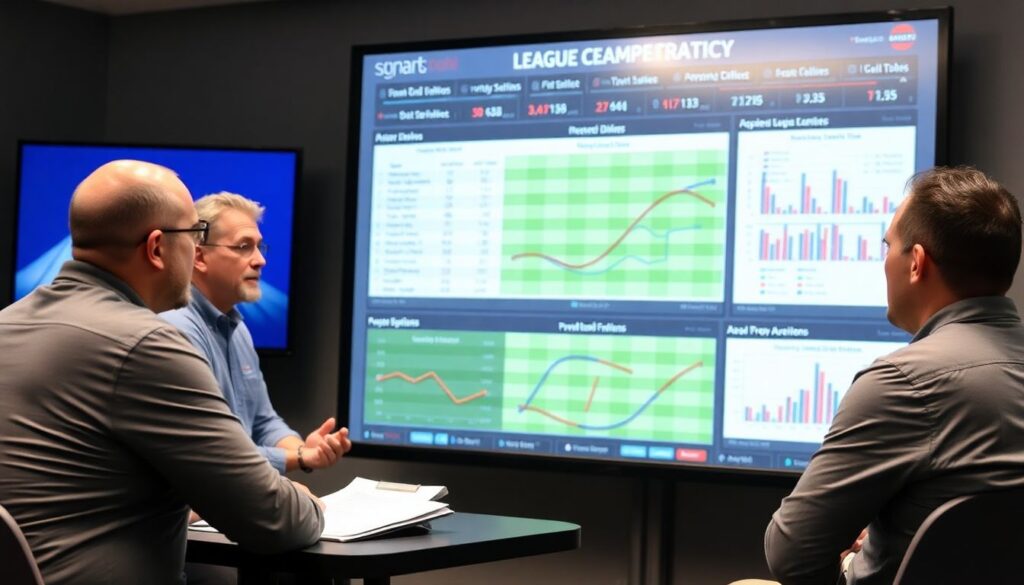
Specialists provide tools, methods and comparative data across leagues. Their value depends on how well they adapt their models to the club’s style and how clearly they explain limitations and assumptions to coaches.
Do advanced stats work equally well in every league?
Metric definitions can travel, but interpretations must adapt to tempo, officiating, tactical culture and pitch conditions. Before comparing players or teams across leagues, adjust expectations for style and context.
How should players be involved in the use of statistics?
Players usually respond best to a few clear indicators per role, combined with clips. Overloading them with numbers creates anxiety and confusion instead of helping them improve behaviours on the pitch.
Is it dangerous to use stats for youth development?

Stats can help track progress but should not dominate selection or playing time decisions. Over‑focusing on measurable outputs may push young players to chase numbers instead of learning tactical understanding and creativity.